By admin
In recent years, the significance of understanding livestock residue in the food industry has become increasingly apparent. With the global food supply chain growing more interconnected, it’s pivotal to ensure safety, economic viability, and sustainability. Livestock residue studies serve as a foundation to address health concerns, financial implications, and environmental challenges associated with the production and consumption of animal-derived food products.
How Do Livestock Residue Studies Impact Food Safety?
Understanding Health Risks
The presence of residues, such as antibiotics, pesticides, or growth hormones, in animal products can pose potential health risks to consumers. These studies are essential as they help pinpoint harmful substances and establish safety thresholds to protect public health.
By identifying potential hazards, researchers can recommend mitigation strategies to ensure that food products entering the market maintain safety standards.
Livestock residue studies also play a pivotal role in enhancing consumer confidence by addressing health-related concerns linked to food consumption. By uncovering the presence and concentration of various residues in food products, these studies enable regulatory bodies to craft more precise and effective safety standards. Consequently, informed consumers can make healthier choices, knowing that food products comply with rigorous safety guidelines.
Furthermore, the results of such studies underscore the importance of robust food monitoring systems to prevent health complications stemming from contaminated food sources. By establishing traceability and accountability within the food supply chain, these studies aid in early detection and response to residue-related issues. Thus, they significantly contribute to maintaining the overall integrity and safety of the global food supply.
What is the Economic Influence of Livestock Residue Studies on the Food Industry?
Market Regulations and Compliance Costs
The insights gleaned from livestock residue studies form the backbone of market regulations and standards that guide the food industry. Regulatory frameworks based on these findings compel producers to adopt practices that adhere to stringent safety and quality standards. As a result, these regulations can potentially increase compliance costs for producers, impacting their operational budgets and pricing strategies.
Producers often face the challenge of balancing compliance costs with market competitiveness, and livestock residue studies play a crucial role in shaping this landscape. By understanding the cost implications of adhering to residue-related regulations, producers can devise more efficient operational strategies. From implementing residue mitigation techniques to investing in technological advancements, these studies guide producers in optimizing their compliance efforts without compromising profitability.
Moreover, the economic influence extends beyond individual producers to encompass the broader market dynamics. Regulatory developments based on livestock residue studies can affect supply chain collaboration, product pricing, and distribution strategies. As markets adapt to comply with new regulations, livestock residue studies act as a catalyst for innovation, promoting practices that drive economic sustainability within the food industry.
In What Ways Do Livestock Residue Studies Contribute to Sustainable Food Practices?
Reducing Environmental Impact
One of the core contributions of livestock residue studies is their role in minimizing the environmental impact associated with the food production process. By investigating the residues present in animal-derived products, researchers can propose practices aimed at reducing resource consumption and waste generation. These studies advocate for sustainable livestock management methods that prioritize resource efficiency and eco-friendly practices.
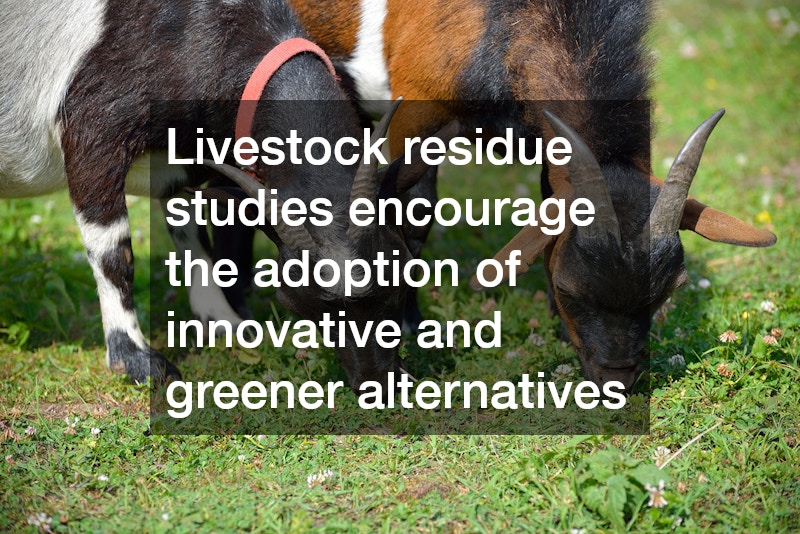
Livestock residue studies encourage the adoption of innovative and greener alternatives that benefit both the environment and the industry. Researchers leverage these studies to promote more sustainable feeding practices, waste management techniques, and nutrient recycling methods. Producers are guided in making decisions that not only mitigate residue-related risks but also contribute to a cleaner and healthier ecosystem.
In the broader context, these studies foster a culture of environmental stewardship within the food industry. As consumers become more conscious of the ecological impact of their consumption choices, livestock residue studies guide producers in aligning their practices with consumer demands for sustainable products. Consequently, these studies not only drive the adoption of environmentally friendly practices but also create a competitive advantage for producers committed to sustainability.
Livestock residue studies play a foundational role in shaping the future landscape of the food industry. Their influence extends across food safety, economic viability, and environmental sustainability, highlighting the multifaceted impact of these investigations. As the industry progresses, the importance of ongoing research and awareness becomes increasingly vital to ensuring that the food supply chain remains safe, economically sound, and environmentally responsible.